Could Old Glory Carry Five More Stars?
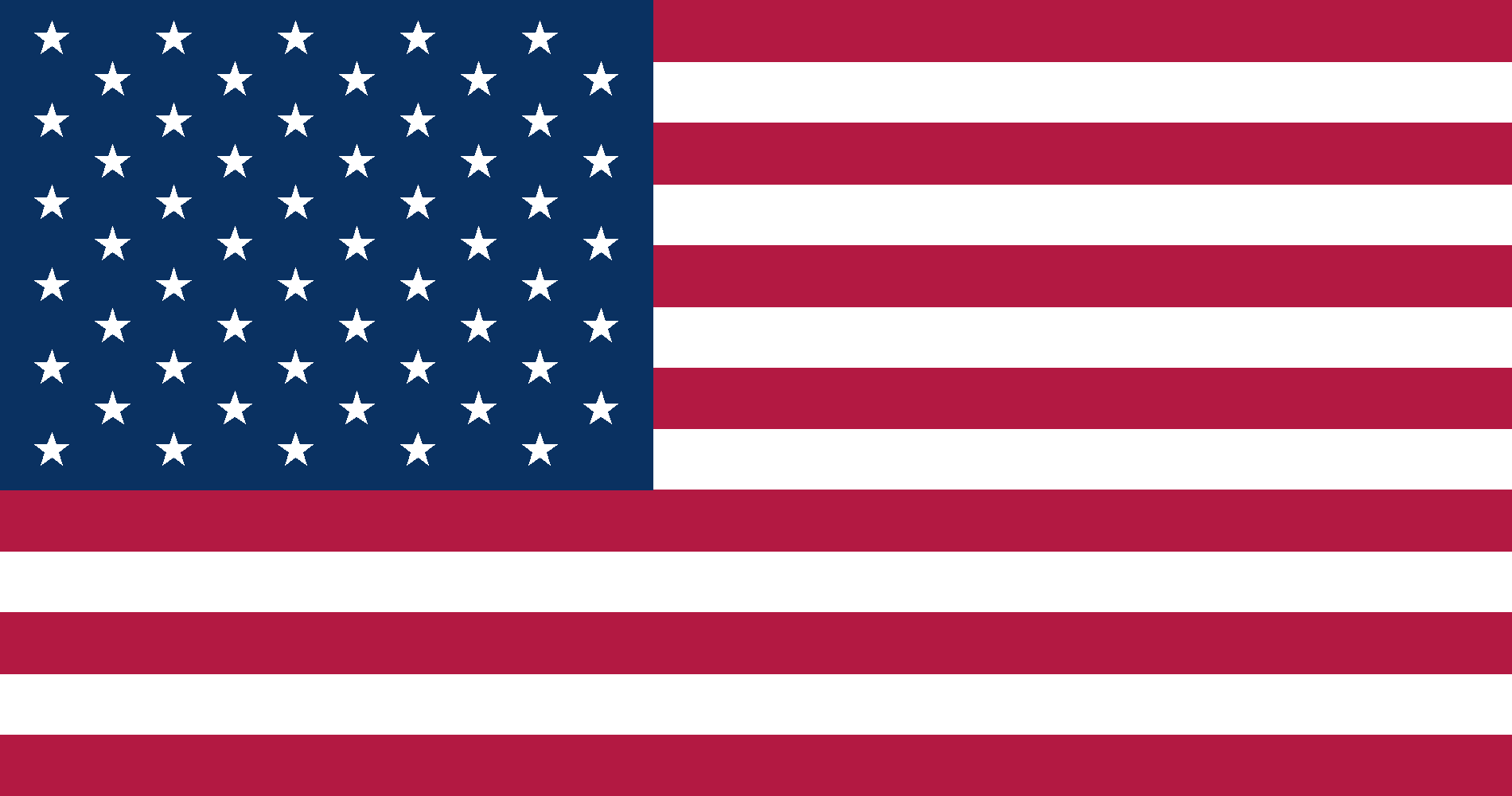
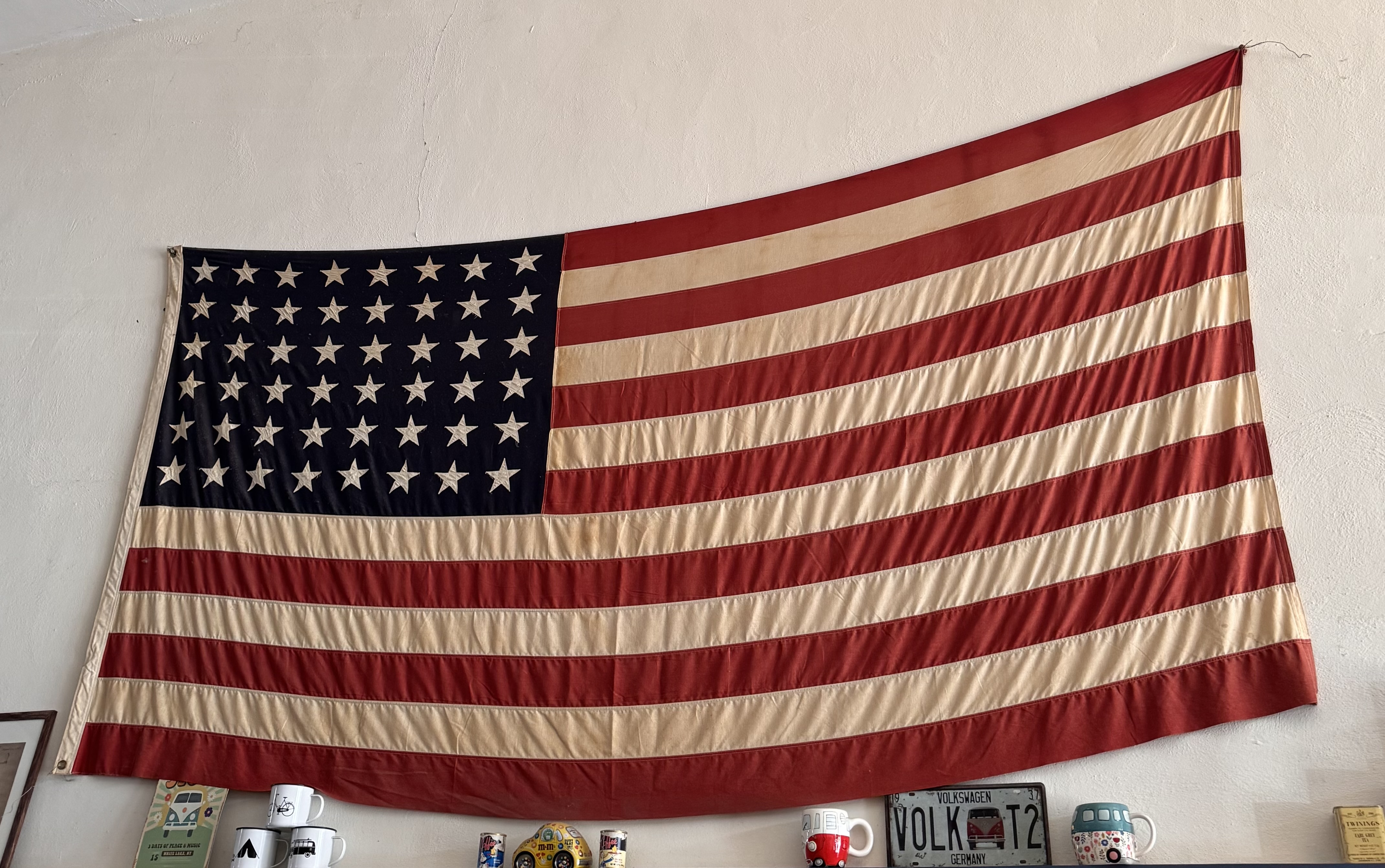
Shortly after exploring what a 55-star American flag might look like, I encountered a 48-star flag hanging in a coffee shop.
I noticed because the stars were not staggered. They stood in uniform rows: six across and eight down. When I mentioned it to the owner, he remarked that few customers ever noticed. The flag had apparently hung there since he purchased the place, although I never asked how long ago that was. The uncertainty somehow made it better.
For forty-seven years, that design represented the complete United States. Today, some of us immediately see two missing stars, and that contrast matters. Puerto Rico has remained under United States sovereignty since 1898, longer than the territorial period preceding any current state’s admission. Suppose Puerto Rico and the four other inhabited territories each independently chose statehood and requested admission.
Could Old Glory carry five more stars?
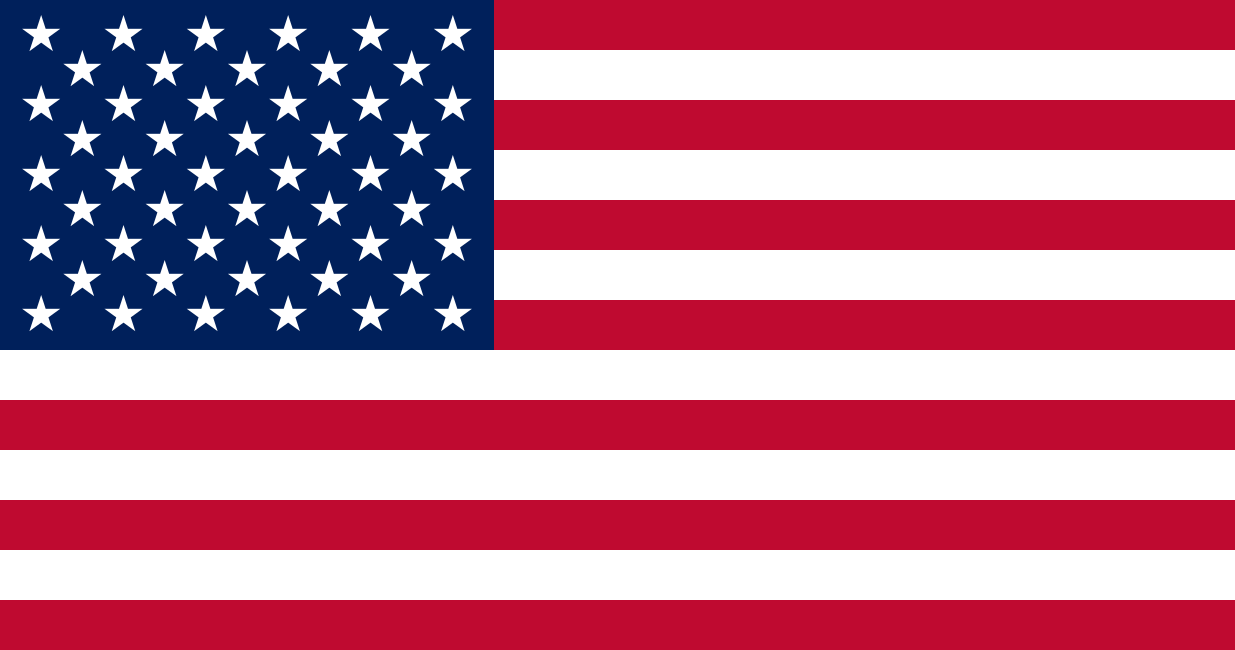
Finding a balanced arrangement of fifty-five equally spaced stars proved surprisingly difficult. It became a vexillological (Microsoft Word red squigillied this…interesting) puzzle, a word I had to look up, too, meaning one concerned with flags.
Yet the design problem points toward the real question: Could the principles and constitutional machinery that carried the Union from forty-eight states to fifty still operate in the twenty-first century?
The 48-star flag became official in 1912 and served the Nation for forty-seven years. It flew through two world wars, the Great Depression, and the opening years of the Cold War. It was raised above schools, lifted atop Mount Suribachi at Iwo Jima, displayed at inaugurations, and draped over the coffins of Americans who served beneath it.
For nearly half a century, it did not look incomplete. It looked like the United States.
Many Americans who have completed a few more laps around the Sun began their lives in a 48-state country. The fifty-star Nation feels timeless to those of us born later, but it is younger than many people still living in it. Completeness, it seems, is sometimes what familiarity has taught us to accept.
During World War II, the United States had only forty-eight states. Hawaii and Alaska were both territories.
Pearl Harbor was attacked beneath a 48-star flag. When President Franklin Roosevelt revised his speech to Congress, he added the phrase “the American island of Oahu,” deliberately reminding listeners that the distant island under attack was American soil.
The distance between the continental United States and Hawaii didn’t make the attack foreign. Guam, another American territory, was attacked hours later and occupied by Japan. In 1942, Japanese forces bombed Dutch Harbor and occupied the Alaskan islands of Attu and Kiska. So, the Americans who were born during the 1940s began school with forty-eight stars hanging in their classrooms. Yet memory has a clever way of redecorating the past. Even some who lived through the transition may now hang the familiar fifty-star flag inside their childhood recollections. Consequently, the American map most Americans remember from school did not yet exist during one of the country’s defining historical periods.
Every Added Star Was Once an Argument
No state entered the Union merely because an empty place awaited its star. Each admission required Americans to argue over whether the country should change.
As the Nation expanded from east to west, the objections changed their clothing but often kept the same shape. Utah faced suspicion over religion and polygamy. New Mexico and Arizona prompted arguments about language, culture, race, governance, and whether they should enter separately or together. The Dakotas became entangled with population, economics, and partisan power.
Alaska and Hawaii later faced questions involving distance, defense, cultural difference, communist influence, economic viability, and control of the Senate. None looked inevitable while its debate was occurring. New Mexico remained a territory for 62 years, an extraordinarily long wait that was still less than half the time Puerto Rico has now spent under United States sovereignty.
In each of these cases, the eventual answer was admission: another attempt, however imperfect, “to form a more perfect Union.”
Forty-Nine Reporting for Duty
When Alaska entered the Union in January 1959, it produced a mathematically delightful 49-star flag: seven rows of seven stars, arranged with the confidence of a nation that had finally discovered a perfect square. The design became official on July 4, 1959, and Hawaii was literally in the queue to join the Union that August. Another star was waiting before the new flag reached the pole.
After one year of federal service, minimal classroom exposure, and barely enough time for flag manufacturers to unpack their boxes, the 49-star flag was retired. It quickly became obvious the American definition couldn’t get no satisfaction.
It is historically relevant, mathematically satisfying, and entitled to recognition, but it won’t be getting a photograph with the article. Instead, I have constructed a lingual participation trophy from tape and Styrofoam. The paint may still be wet, one handle is noticeably higher than the other, and the engraved plate reads, “49 Stars: You Were Official, Too.”
Thank you for your service. Please clear the flagpole for the next contestant.
Fifty Becomes “Normal”
When Hawaii entered the Union in August 1959, the perfectly square 49-star flag was already obsolete. The present design became official the following July and quickly settled into American life.
Hawaii arrived as television and commercial jet travel were replacing how Americans imagined distance with good vibrations and leis. Newsreels, radio, magazines, and television introduced the country to its newest state, while jet service made its advertised paradise increasingly reachable. “Aloha” now welcomed travelers to the fiftieth state, and tourism surged. Hawaiians were part of the American Ohana.
Then the map stopped changing. Fifty began to feel less like the latest outcome of an unfinished historical process and more like a natural constitutional limit. Here’s the thing. It’s not.
Now imagine that Puerto Rico, Guam, the U.S. Virgin Islands, American Samoa, and the Northern Mariana Islands each held its own democratic process. Imagine that every population, freely and independently, chose statehood and unmistakably asked Congress for admission.
The experiment does not presume that all five territories want the same future. It begins only after each population has decided for itself that it is willing to join the Union.
A full Civil Affairs assessment could examine the political, military, economic, social, informational, and infrastructural consequences, along with the physical environments involved and the time required for transition. That assessment could fill considerably more than one article, so I will exercise some restraint and leave the overlay folded for now.
Our hypothetical is simpler. Five distinct populations of Americans have independently asked for equal membership in the Union.
What would America do? Now the answer may just be a true American breakthru.
First, Who Gets the First Say?
Before answering, we should be clear about who has already spoken. These territories are not interchangeable, and their residents are not foreign populations asking the United States to annex them. They are Americans already living beneath its flag and subject to its federal authority.
No state has ever been admitted through a nationwide popular referendum. The Constitution gives Congress the authority to admit states, so Americans in the existing states participate through their elected representatives, not by voting directly on another population’s future.
In this hypothetical, each territory’s people have spoken first. Their representatives would negotiate the terms of admission, Congress would debate and vote, and the final terms could return to the territory for acceptance.
So, consent is not a disclaimer stapled onto this exercise. It is the condition that makes the exercise legitimate. And those of us already fully represented in, on, or whatever the Land of the Free should approach that conversation with some humility.
History offers a recognizable pattern. A population chooses, its representatives petition, terms are negotiated, Congress votes, and a state enters the Union on equal footing. Another star joins the flag.
Could the United States rinse and repeat five times? I don’t know. It’s been a long time since Americans have considered it. While this article is intentionally light on substance, the process would be anything but. Each admission would carry a semester’s worth of political, economic, legal, cultural, and socioeconomic questions. This article cannot settle them. It asks whether the constitutional machinery could still engage them.
Distance would certainly return to the debate. Oceans remain wide, flights remain expensive, and geography continues to affect transportation, defense, trade, and daily life. Yet remoteness no longer means what it did when the last two states entered the Union.
Commercial aviation moves people across oceans within hours compared with an era of ship-only travel. There won’t be a need to come sail away to our newest states; we can fly like an eagle instead. Eh, maybe a condor given those distances. Today, digital networks connect families, governments, institutions, and businesses continuously. Trans-Pacific undersea internet cables? Fuhgeddaboudit.
A classroom in Wisconsin and one in Guam can already meet face-to-face without either crossing the Pacific, provided they take turns hosting a school lock-in sleepover. Statehood could also stimulate national awareness, tourism, investment, and transportation demand, potentially strengthening the connections critics might initially find insufficient.
In the twenty-first century, remoteness remains a logistical condition. It need not remain a civic one.
The Constitution does not begin with “We the Fifty States.” It begins with “We the People of the United States.” That “We” has never been a fixed number on a map. It has been argued over, tested, denied to many, and expanded through generations of Americans insisting that the Nation honor its principles more completely.
The territories are not standing before America to prove themselves worthy. They are already part of Our American Story. The question is whether the Nation’s response would be governed by consent, meaningful representation, equality, and self-determination.
Equality would not require compulsory assimilation. Statehood need not erase languages, cultures, histories, or identities. Federalism is valuable precisely because it allows distinct populations to participate in one Union without becoming culturally identical. E Pluribus Unum. Admission should enlarge the American family, not require its newest members to surrender what they bring to it.
Congress would still examine the consequences, negotiate terms, and exercise constitutional judgment. The standard should not be whether these Americans look, speak, live, or vote in any mysterious ways. It should be whether the Union remains capable of welcoming another population as an equal member when that population freely asks.
The territories are not the institutions under examination.
America is. (There, I said it. Can we move on now and get to work, please?)
One More Round, Please
The coffee-shop flag did not look unfinished. The current flag does not look unfinished either. If what’s past is prologue, familiarity should not be confused with finality.
Since Betsy Ross sewed the first stars into place, Americans have repeatedly accepted a new flag, recognized it as their own, marched proudly beneath it, and, when called, risked their lives or given them for what it represented.
To Our Nation’s Gold Star Families, my deepest, sincerest thank you. Your sacrifice is incalculable.
The United States has recognized twenty-seven versions of its flag. Each eventually became Old Glory. That pride does not erase the Nation’s darkest chapters. America proclaimed liberty while permitting slavery. Millions crossed oceans seeking its promises, while hundreds of thousands were trafficked onto its shores and generations of their descendants were born into bondage. America has never perfectly embodied its principles, but those principles gave later generations a standard against which to measure the nation and language with which to demand something better.
Perhaps that is part of the American experiment, learning how it keeps movin’ on. A more perfect Union is not a possession handed down intact. It is something each generation must decide whether it is willing to form again and again, and, hopefully, again.
Perhaps fifty stars will remain because the territories choose other futures. A nation committed to freedom should take seriously any democratic request from a territory to change its political status. Admission as a state, however, creates an entirely different constitutional relationship. Under current Supreme Court precedent, a state cannot simply leave the Union unilaterally. (Texas and California, please put your hands down. We have already been there, done that, and we don’t have to place sisters and brothers back in the saddle again.)
The territories’ answers are not ours, from within the states, to prescribe. Instead, I’m asking Americans to consider what America’s national identity truly requires of us.
We know five additional stars can fit inside the blue field, although arranging them required a surprisingly vexillological amount of effort. The more important question is whether the principles represented by the fifty already there would leave room for five more if they so chose and requested admission.
Conversation
No comments — and this piece isn't open for new ones.
Comments are closed on this piece.