The Playground, the Scoreboard, and the Speaker
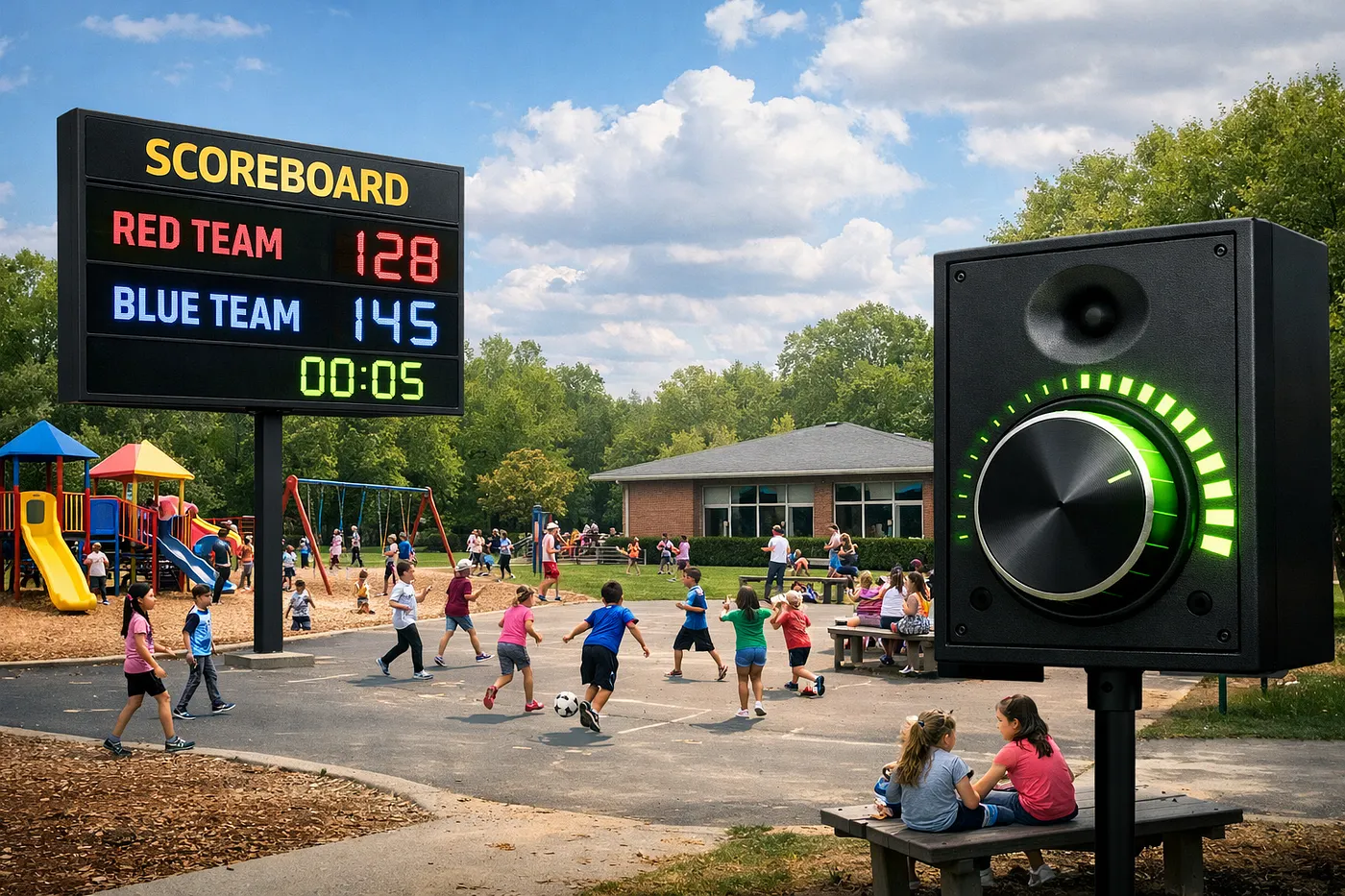
Imagine a school playground.
Kids are playing all kinds of games. Some are slow. Some are fast. Most are just for fun. The playground has a natural rhythm.
Then the school adds a big digital scoreboard.
The scoreboard updates every second. Every point. Every move. Nothing about the games changes, but attention does. Some kids start playing just to make the numbers move. Fast games get more exciting. Small actions get repeated because they show up instantly.
No one is cheating.
No one is doing anything wrong.
They’re just responding to what the scoreboard shows.
Now imagine something else on the playground.
There’s a speaker system with a smart volume knob. Its job is simple: when the playground gets loud, it turns the volume up. When it gets quiet, it turns the volume down. It doesn’t know why things get loud. It just reacts.
At first, everything seems fine.
But as the fast games speed up, the playground gets noisier. The speaker hears the noise and turns itself up. As the speaker gets louder, kids talk louder to be heard. Games get more intense. The noise increases again.
The speaker turns up again.
Soon, even kids who just wanted to play calmly feel it. The playground feels loud. Fast. Stressful. Hard to think in. Recess still exists — but it feels different.
Nobody planned this.
Nobody meant for it to happen.
The scoreboard didn’t break the playground.
The speaker didn’t break the playground.
Together, they changed it.
This is how fast money systems work in the real world.
Cryptocurrency trading and microbetting are like the scoreboard. They update constantly. Prices and odds move all the time. Activity is visible every second.
Automated pricing systems, risk models, and demand software are like the speaker. They listen to activity. When things move faster or louder, they respond automatically.
Individually, both make sense.
But when fast games feed systems that react to speed, everything around them starts to feel louder and faster — even for people who aren’t playing those games at all.
Nothing collapses.
Nothing evil happens.
The environment just runs at a higher pitch.
Sometimes the hardest systems to understand aren’t broken ones — they’re systems that work exactly as designed, together.
So what can be done?
Part Two: Turning the Knob, Quietly
Imagine the playground again.
The scoreboard is still there. The speaker is still there. No one is pretending they can be removed. The games are popular. The announcements are useful. The question isn’t whether they should exist — it’s how tightly they end up connected.
In some playgrounds, people notice something simple: the scoreboard doesn’t actually need to update every second. It can group points together. It can pause briefly between changes. The games continue, but the urge to chase every flicker of the numbers eases.
Nothing dramatic happens.
The playground just feels easier to read.
In other places, the speaker is adjusted to listen differently. Instead of reacting to every burst of noise, it waits to see if the noise lasts. Sudden spikes matter less than steady sound. The speaker still works — it just stops amplifying every shout.
Elsewhere, fast games are given their own corner of the playground. They’re allowed to move quickly, loudly, and competitively, but they’re not treated as signals about how every other game should be played. Speed stays contained, rather than speaking for the whole space.
These kinds of adjustments already show up in the real world.
Some markets group rapid trades instead of displaying every tick.
Some automated systems wait for patterns to persist before reacting.
Some models separate fast, speculative activity from everyday pricing signals.
None of this stops play.
None of it shuts anything down.
It simply loosens the wiring between systems that were never meant to shout into each other all the time.
When that wiring relaxes — even slightly — the environment changes. The noise starts to mean something again. Movement feels connected to reality instead of feeding on itself. People who aren’t chasing the scoreboard don’t feel pushed by it.
The goal isn’t silence.
It isn’t control.
It isn’t deciding which games are “good” or “bad.”
It’s making sure the scoreboard and the speaker don’t end up running the playground together by accident.
Conversation
No comments — and this piece isn't open for new ones.
Comments are closed on this piece.